

Nutritional counseling – hypocalcemia
Our advisors support cattle farmers on a daily basis. Together we work to optimize production costs. We recommend the best feeding solutions tailored to the needs and capabilities of our customers.
3 min. czytania
We audit the current feeding and health status of dairy cows, but also the production and storage of roughage.
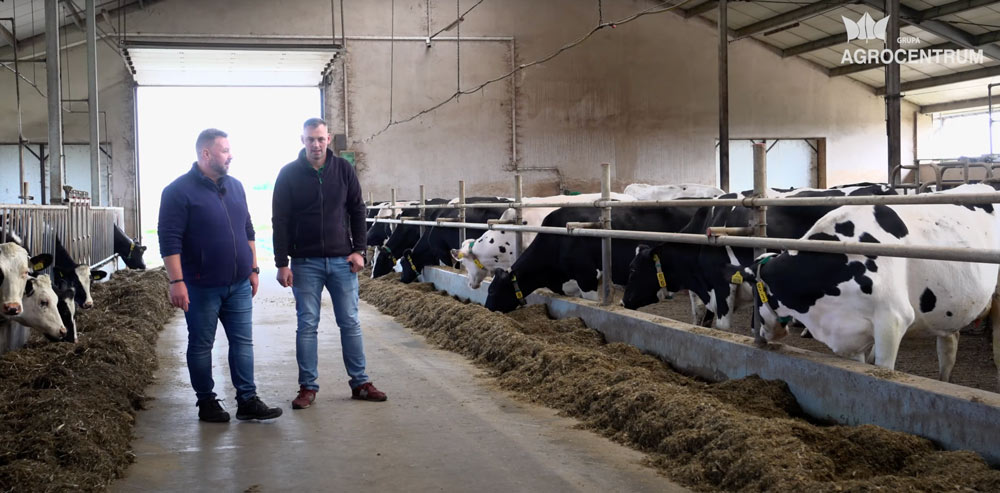
On the Krajewski farm, when analyzing lactation curves (available in the herd management system), we noticed a decrease in lactation persistence around 2-3 weeks, says Tomasz Kaliszewski manager of nutrition and prevention.
In the group of dairy cows preparing for lactation, we introduced the VitAgro Preparation product, which contains encapsulated anionic salts in its formulation.
The anionic salts contained in VitAgro Preparation lower the pH of the urine, which we regularly monitored to determine the appropriate dose of the premix, Tomasz Kaliszewski stresses. Lowering the urine pH during this period causes the secretion of parathormone, which mobilizes the body to resorb Ca from the bone. This mechanism ensures adequate Ca concentration in the blood, thus preventing hypocalcemia.
Hypocalcemia – a metabolic disease
Hypocalcemia is one of the metabolic diseases of dairy cows of the postpartum period. In its clinical form, it occurs most often on the first postpartum day and affects 6 to 13%.
Dairy cows are observed lying down with a characteristic side-to-side and backward position of the head, sigmoid curvature of the spine, loss of consciousness, decreased body temperature and flaccidity of the udder.
Hypocalcemia in its clinical form (also known as milk fever) is caused by a drop in blood Ca concentration below 1.25 mmol/L. In high-yielding dairy cows, a drop in blood concentration below 2 mmol/l causes the subclinical form, which affects up to 50% of cows in the herd.
The disease reduces the ability of striated and smooth muscles to contract (muscle atonia), which can lead to:
- bearing stops
- displacements of the digestive tract
- slower closing of the teat sphincter (mastitis)
- a more difficult birth
- decrease in rumen motility (lower feed intake)
- ketosis
- liver steatosis.
Experimental results – Vitagro Preparation
The specialized Agrocentrum Vitagro Preparation mix has been introduced without the need for a separate ration. Cows are fed a ration from the lactation group before parturition thanks to the replacement of the buffer with Agro Buffer Titan, which is neutral for the cation-anion balance and blends well with the ration containing anionic salts.
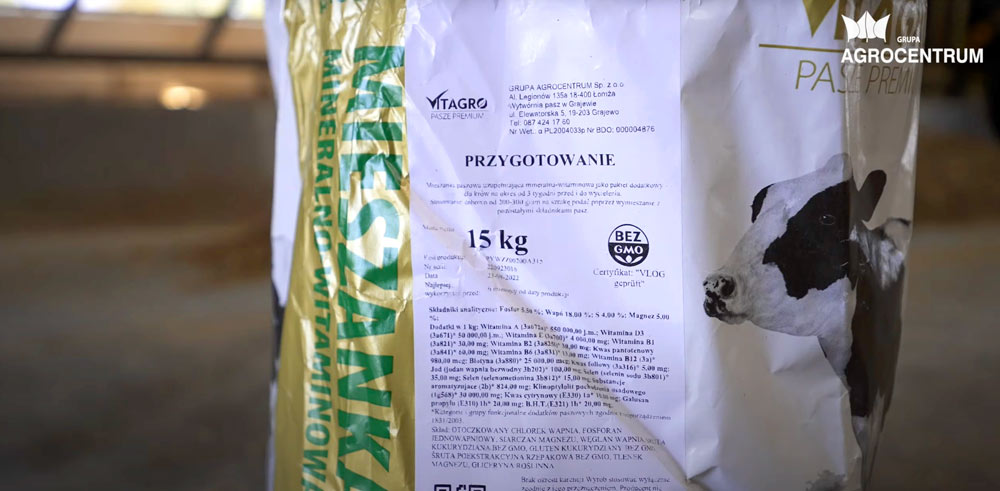
The introduction of the specialized vitamin blend Agrocentrum VitAgro Preparation and the proper balance of the ration helped lower the pH of the cows’ urine and ensured a proper cation-anion balance (DCAB).
Successfully obtained:
- greater postpartum dry matter intake
- increase lactation efficiency
- increase the persistence of lactation
- improving milk parameters
- Increasing successful inseminations.
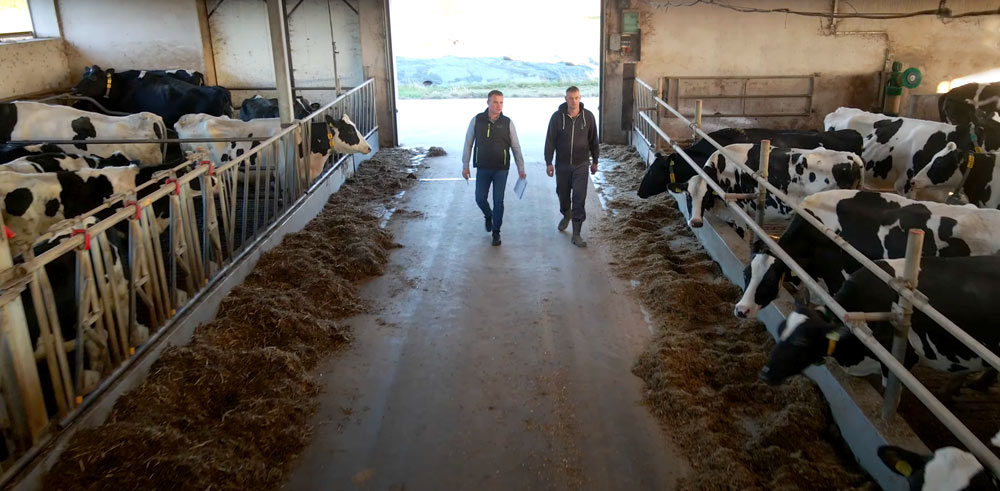
We would like to thank Ania and Michal Krajewski for the opportunity to conduct and present the experiment. We wish you success in breeding, and ourselves the opportunity for further fruitful cooperation.
Feel free to cooperate with us! Take advantage of the nutrition service!
Invite our advisor to visit you!
#Agriculture Center #Blitzbreeders
News
This may be of
interest to you
- Cattle

How to get the highest quality haylage?
Haylage plays an important role in the nutrition of dairy cattle. It forms the basis of the feed base of ruminants. If harvested and stored well, it allows efficient dairy production and high quality haylage.
Read more
- Cattle

5 quick ways to combat heat stress
Read more
- Cattle

What variety of corn to choose?
Read more


